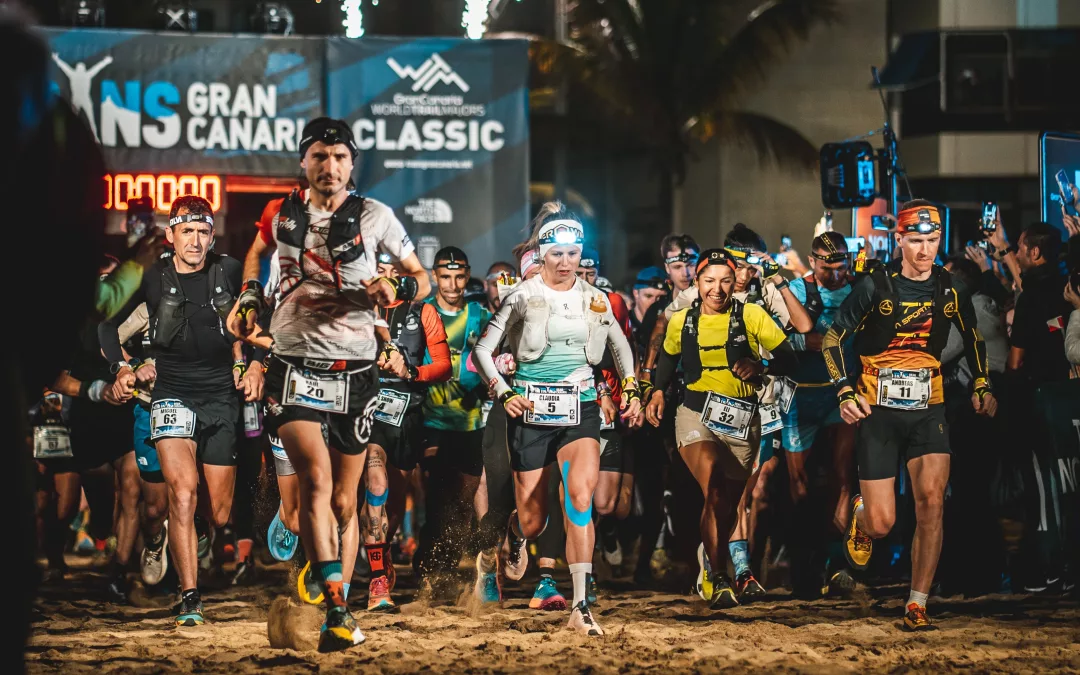
The Transgrancanaria Classic is the biggest ultra in Spain. 125 km and 8,500 m of elevation gain (D+) from north to south across Gran Canaria, from the Atlantic to the dunes of Maspalomas.
The numbers
| Metric | Value |
|---|---|
| Distance | 125 km |
| Elevation gain (D+) | 8,500 m |
| Highest point | 1,949 m (Pozo de las Nieves) |
| Start | Agaete (north, sea level) |
| Finish | Maspalomas (south, sea level) |
| Official cut-off | 40 h |
Three moments that define the race
KM 60 — Pozo de las Nieves (1,949 m)
The high point of the race, right on halfway. This is where you find out who can handle the damage they've already done and who can't.
KM 70-90 — Las Cumbres
Technical ground high in the volcanic mountains, with frequent cloud and strong wind. The most technically demanding terrain on the course.
KM 115-125 — The dunes of Maspalomas
Soft sand on wrecked legs after 115 km. The most iconic final test in Spanish trail running.
Benchmark times
| Level | Estimated time |
|---|---|
| Elite | 16h – 18h |
| Advanced | 22h – 28h |
| Amateur | 28h – 36h |
| Official cut-off | 40h |
Fuelling strategy for 28-40 hours
- Hours 0-8: adrenaline. Eat little, drink plenty. 200-250 kcal/hour.
- Hours 8-20: your best window for absorbing food. 350-400 kcal/hour.
- Hours 20-32: the crux, thanks to sleep deprivation. 250 kcal/hour.
- Hours 32-40: survival. Whatever you can keep down.
Kit that matters
- Down jacket (the night up in Las Cumbres is cold).
- Head torch with plenty of burn time.
- 8-12 L pack.
- Shoes that grip on volcanic rock.
- Poles recommended.
Common mistakes
- Going out too hard on the climb from Agaete.
- Not carrying enough layers for the night in Las Cumbres.
- Underestimating the dunes at the end.
- Managing sleep badly on the second night.
In short
Transgrancanaria is the Spanish ultra: every kind of weather, moderate altitude but genuinely technical ground, and the epic of crossing the island from north to south. If you're only going to do one big ultra in Spain, this is candidate number one.