The Transvulcania Classic is the most demanding ultra trail in Spain per metre of climbing. It isn't the longest, nor does it have the most elevation gain in absolute terms, but the combination of 74 km and 4,760 m of elevation gain on volcanic terrain gives it the highest DNF rate of any Spanish race.
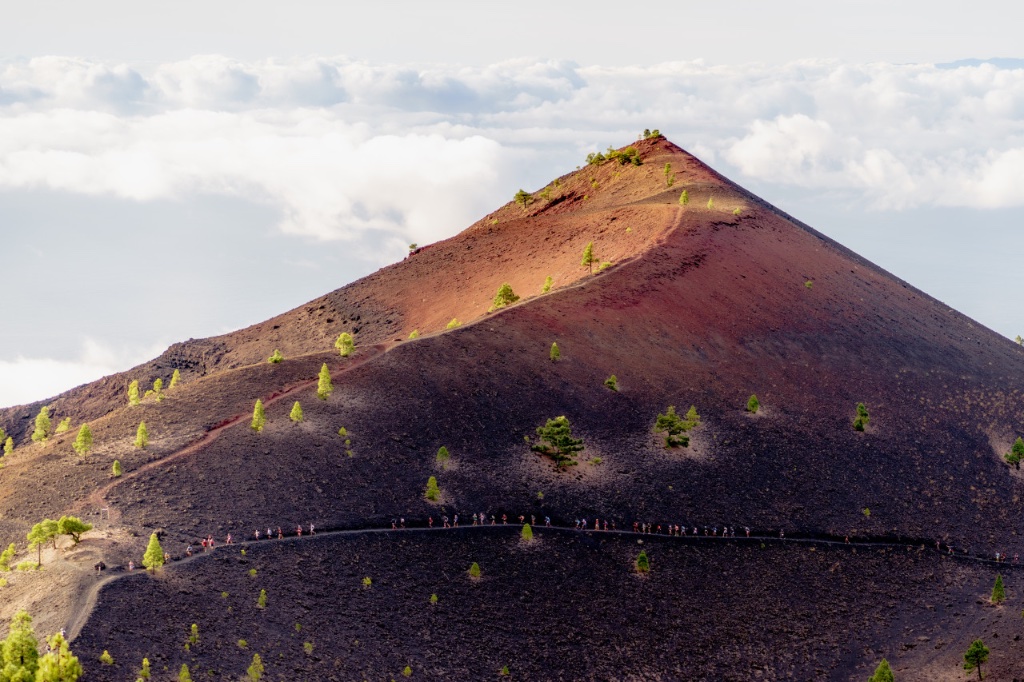
The numbers
| Metric | Value |
|---|---|
| Distance | 74 km |
| Elevation gain (D+) | 4,760 m (average 64 m/km) |
| Highest point | 2,426 m (Roque de los Muchachos) |
| Official cut-off | 20 hr |
Segment-by-segment strategy
Segment 1: KM 0-15 — Puertito to Tentenelaire
Elevation: +1,600 m · Difficulty: Medium (deceptively so)
You start at sea level and climb without let-up. The temperature is mild. The classic mistake: going out too hard because the opening kilometres feel easy in the head. They aren't.
Segment 2: KM 15-35 — The final push to the Roque
Elevation: +2,000 m · Difficulty: High
Technical track over volcanic rock. The thin air starts to tell from around 1,800 m. The crux comes at km 20 (Pinos de Galmes), where a lot of runners begin to feel properly battered.
Segment 3: KM 35-74 — The brutal technical descent
Descent: -2,400 m · Difficulty: Very high
This is where the real difficulty lies. It isn't the climbing but the technical descent after 35 km and 2,400 m of ascent. Your body has burned through most of its glycogen and your quads are in permanent eccentric contraction.
Fuelling strategy
- Hours 0-3 (km 0-25): eat little, drink plenty. 200-250 kcal per hour. The aim: zero depletion.
- Hours 3-8 (km 25-55): the dark window. Hold 300-350 kcal per hour.
- Final 2-3 hours (km 55-74): survival food. Whatever you can stomach.
Recommended kit
- Jacket, compulsory (100-150 g).
- 8-12 litre pack.
- Mid-cut trail shoes.
- Poles strongly recommended.
- Head torch.
Reference times
| Level | Estimated time |
|---|---|
| Elite | 7 hr – 9 hr |
| Advanced | 10 hr – 13 hr |
| Amateur | 13 hr – 18 hr |
| Official cut-off | 20 hr |
The mistakes that end races
- Setting off too fast.
- Not carrying a jacket.
- Patchy hydration.
- Not eating at the early aid stations.
- The wrong shoes for volcanic rock.
The bottom line
The Transvulcania is neither the longest race nor the one with the most climbing, but the rate at which that climbing accumulates (64 m/km) makes it savagely hard. The runners who finish are the ones who respect the first 20 km, eat and drink on a schedule, and treat the technical descent as an exam in concentration.